I sobbed quietly when the number of deaths from COVID-19 exceeded 100,000 in the U.S. Until then, I didn’t know how to mourn for such many lives lost in just three months. Most of them died alone in the hospital. I thought about the pain that their family and friends felt. And they had to deal with it without a place to mourn, without the comfort of the physical presence of other people. The whole thing is inhumane.
It felt very strange, at the same time, that I lived my life almost as usual. Except when I made a minor adjustment to wear a mask for grocery shopping, I haven’t felt the presence of COVID-19. I probably don’t have enough cognitive ability to comprehend such tragedy. Or is it the innate human ability that enables us to survive a horror like this? I couldn’t make sense of my detachment from reality, and it bothered me a great deal.
It is a no brainer in Japan to wear a mask even with the slightest sign of a cold. I didn’t wear a mask as a child even when I had a bad cough, but as I grew older it became an expectation to protect other people. And then something shifted in Japanese thinking, and now they wear a mask to protect themselves from others who might have a virus. I don’t like it as it feels as if they are always victimizing themselves or being fearful of something that may attack them. That mentality seems sicker than a cold. But wearing a mask to protect yourself is now Japanese common sense.
I’ve watched several Japanese TV programs where a panel of specialists discussed how to prevent the spread of COVID-19. In the last program I saw, they showed a prototype for a device that changes the air flow in the room from horizontal to upwards. It was rather bulky and I wasn’t sure whether it was practical, but their tireless pursuit of every possible way for a safer living was admirable. Then, I switched the channel to a US news program, and I saw many people in the southern states going about their lives without masks, and the numbers of COVID-19 patients in those states were rapidly increasing.
What puzzled me the most is how it is possible for Americans who are religious or spiritual to risk theirs and their loved one’s lives by not wearing a mask. Do they think they are invincible? Do they not cherish their lives bestowed on them by a higher being? The more I think about it, the more flummoxed I am.
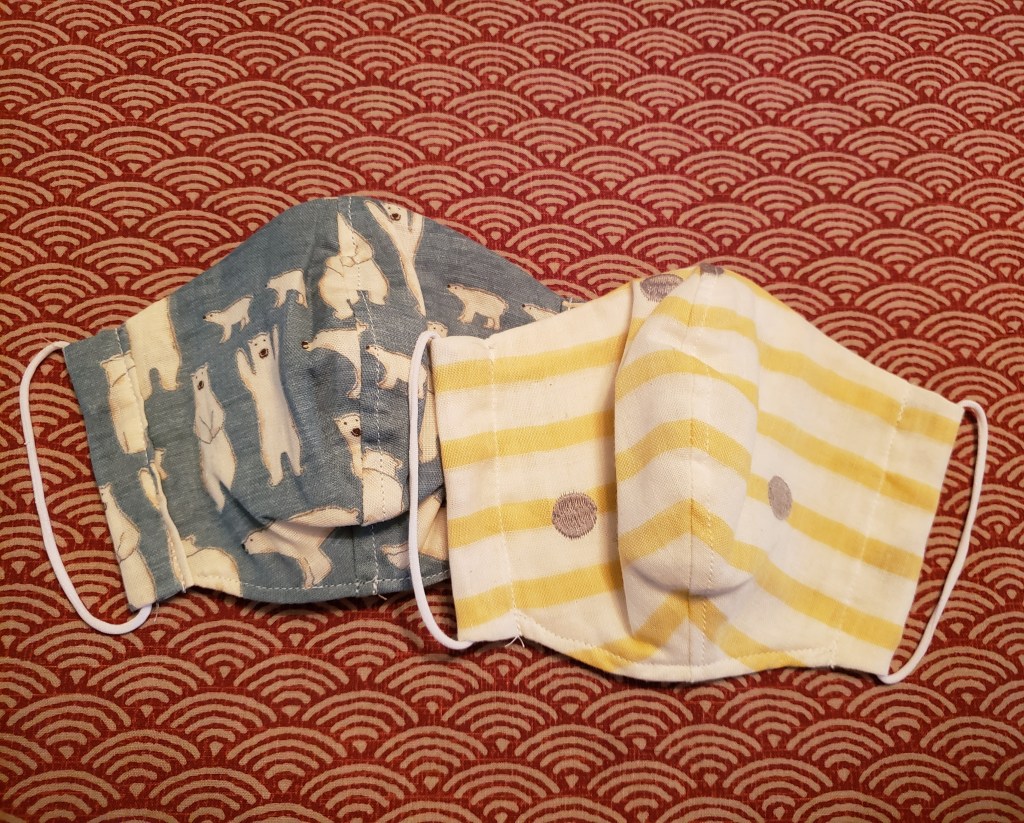
Then it occurred to me that I may have been thinking about it in the wrong way. Not wearing a mask isn’t about religion or spirituality or life. I now think that it’s about inconvenience. My theory may prove to be wrong, but it seems to make sense.
Japanese wear a mask not because they are highly spiritual beings, but because they are trained to do so by doctors, teachers, parents and peers. Everybody does it, so you will wear it so that you can blend in and be part of society. By fulfilling the collective need for safety, they can avoid blame when something goes wrong. Some may question the effectiveness of the mask-wearing practice, but no one will question those who have practiced it.
There is no such societal pressure in the U.S. Besides, convenience is good for you. Why endure inconvenience when there’s a quick solution ready for you. You don’t want to cut an apple for your kids? Here’s a bag of cut-up apples ready to go. You can microwave a bag of pre-washed and pre-packaged corn, green beans, and spinach instead of cooking them in a pot, which you need to wash afterwards. A service will appear where there is a need. Please don’t get me wrong, I like convenience. But the problem is that once we’ve gotten used to the convenience, however insignificant it may be, it’s hard to let it go. And Americans are not trained to endure inconvenience for the collective good. They don’t feel the societal pressure, simply because it only vaguely exists.
For some Americans, wearing a mask is not a life-or-death issue. It’s probably more about “why do I have to wear a mask when I don’t really feel the consequences of not doing it?”
I live in NJ where the per capita rate of COVID-19 patients was the highest in the U.S. for many weeks. Yet, I couldn’t see the solid line between that data and my peaceful life in the suburbs. Even though I knew people were dying at the near-by hospital, I didn’t have a firm grasp of that fact. To reconcile this gap, I kept saying to myself “two more weeks” so that I wouldn’t exhaust my patience for social distancing and staying at home.
So, to people in the south, who have seen or heard about the COVID-19 in the news but haven’t felt the effect of it, the crisis in the Northeast must have seemed like something bad happening on the moon. They might also have been mentally fatigued before it actually hit their area. They were already fed up. So for them and for me, when the news is so horrific but your life remains somewhat normal, it’s hard to connect the dots. It’s hard to let go of the convenience of a mask-free life.
My initial forecast back in March was that we would be able to celebrate July Fourth without any restrictions. Now that July is approaching, I’m not sure about it. Even if the governor says we can, I don’t think I could throw a barbeque party. I’m getting more confused as the time goes by. I didn’t recognize the immediate danger back in March, but I followed all the instructions given by the TV doctors and NJ governor. Much later in the game, I finally connected the dots and reconciled it with reality. Now reality is changing for the better, and NJ is opening up, but I can’t let go of the inconvenience that has confined me at home. Does learning always come with a delay for me? That may be true, but it also seems that unconsciously, I have already decided that I will keep my mask on and practice social distancing until the second wave of COVID-19 passes entirely.
For me, it is less about convenience or inconvenience, and more about letting go of whatever I’m used to. Changing the behavior of a human being, based on my personal experience, is quite a challenge.
I sincerely hope that people who haven’t started wearing a mask will do so soon. I hope they’ll connect the dots much more quickly than I did, because for the small price of inconvenience, they’ll get to keep the most precious gift of all: life.
I am glad this essay encourages people to wear masks to protect others as well as themselves. It is maddening to me that some people don’t want to be inconvenienced when it is such a small price to pay for potentially great benefits. Thank you Michiko for writing this excellent essay.
Lois McDonald
LikeLike